
Sobremesa, and What
Italian Names Instead

Nobody is leaving. There is no reason to stay and no reason to go, and that suspension is the part of the meal people actually remember. This piece started as an attempt to find out what Italian calls that hour. The answer turned out to be more interesting than a word.
Sobremesa: Spanish Has a Word for It
Spanish does have a word, and Kinfolk took it apart in its Word column, in a short piece written by Apoorva Sripathi. Sobremesa: sobre, on top of, and mesa, table. Over the table. The time after the food when the table is still doing something.
Her description is specific rather than sentimental. Chairs pushed back. Conversations running for hours. Cards sometimes. An argument, conducted gently. Something to drink that is no longer wine.
She also reaches for the sociologist Georg Simmel, who treated the shared meal as one of the basic facts of being human and called eating together the quintessential social occasion. The point she takes from him is that a meal turns an animal necessity into a small working model of how a group holds together.
The piece never mentions Italy. That connection is ours, and it is the reason we started looking.
Fare la Scarpetta: Italian Names the Gesture
What Italian does have is startlingly precise about everything on either side of that hour.
There is a word for wiping your plate clean with a piece of bread: fare la scarpetta. The Accademia della Crusca traces the earliest attestation to a Romanesco exchange in the magazine La Frusta on 2 September 1871, where somebody says famme fa la scarpetta a sto tantino de sugo, che c'è arimasto. Let me do the scarpetta on this last bit of sauce.
From there it runs through the dictionaries of the centre and south. An Abruzzese study records it in 1885, comparing it to the Tuscan ritocchino. Finamore's Abruzzese vocabulary picks it up in its second edition of 1893, having left it out in 1880. The first proper lexicographic entry arrives in 1952, marked as Roman.
Where the word comes from, nobody knows. One proposal connects it to scarsetta, a Sicilian word for scarcity, carrying the instruction that nothing gets wasted. Another to a cheap, flexible shoe. Another to a concave pasta shape that collected sauce. The Crusca sets them all out and then says, plainly, that none of these hypotheses is verifiable at present.
The etiquette is clearer than the etymology, and stricter than people assume. Formal etiquette has generally forbidden it. What has changed is the view from the kitchen: Gualtiero Marchesi, who had every reason to want his plates admired rather than wiped, was among the chefs who treated a plate coming back clean as the real compliment.
A language that names the bread-mopping to this level of detail is not a language that overlooks the table.
Abbiocco: Italian Names the Aftermath
There is also a word for what happens an hour later, and it is a better word.
Abbiocco: the heavy drowsiness that arrives after eating. Treccani derives the related verb abbioccarsi from biocca, and glosses it as settling down to brood, or crouching the way a sitting hen does. The image is the hen hunched over her eggs with her head dropping, and the dictionary still marks the word as regional. Anyone who has watched somebody slide quietly down a chair after a long lunch will recognize that it was chosen by someone paying attention.
So the language has a term for the gesture during the meal and a term for the physical state afterward. Both are precise, both are a little comic, and both are about what the food does to a body.
Sobremesa and Dopopranzo: What Versus When
Between those two words sits the hour this article started with, and Italian has no single everyday noun for it. The reason turns out to be more interesting than the absence.
Look at what each word is actually doing. Sobremesa means over the table, and what it names is an activity: people sitting, talking, the meal continuing without the food. The table is inside the word.
Italian offers dopopranzo and dopocena. Treccani glosses dopopranzo as pomeriggio, parte della giornata che segue al pasto di mezzogiorno: the afternoon, the part of the day that follows the midday meal. It is most often used as an adverb, as in ci vedremo dopo pranzo, we will see each other after lunch.
Which means those words tell you nothing about what anybody is doing. You can go to the cinema dopocena. You can call on somebody dopopranzo and find them still at the table two hours later. The word marks a stretch of the day and leaves the contents open.
So the two languages are not unequally equipped. They have noticed different things. Spanish named the activity and kept the table in it. Italian named the hours and left them empty, available for coffee, conversation, cards, a walk, the cinema, or another two hours in the same chair.
One language keeps the table in the word. The other lets the meal finish and leaves everyone sitting there anyway.
If a dialect somewhere carries the noun that standard Italian does not, we would like to know, and we have not found it. The places it would most likely survive are the ones with the least searchable dictionaries.
The Thing Happens Anyway
A missing word has never stopped anybody doing anything.
Emiko Davies has lived in Tuscany for years and writes about Italian food from inside a family rather than from a holiday. In an interview for Table Magazine in the United Kingdom, with words by Alexandra Dudley, she puts it plainly: eating is what life revolves around in Italy.
The detail that lands hardest is a scheduling one. In the Tuscany she describes, half past eight in the evening is a completely normal dinner hour for small children, because the evening meal is something the whole household does at once. Bedtime is arranged around dinner rather than the reverse.
She also describes recipes arriving through her mother-in-law and settling into the family repertoire, which is how so much Italian cooking travels: sideways between kitchens rather than down from a book. We have one of those cards ourselves, in a grandmother's handwriting, and it behaves exactly as she describes.
And It Is Not a Postcard
The same interview contains the part that usually gets left out, and it is the reason we are citing it rather than something more flattering.
Her elder daughter was a difficult eater for years. Spaghetti, and only spaghetti, no other shape, with olive oil and parmesan. School lunches that came back untouched, so the child arrived home from an eight-hour day with an empty stomach. And a goal Emiko describes holding for a long time, which was to cook one single thing that everybody at the table could enjoy.
That is a cook who writes books about Italian food describing years of making two dinners. Anyone who has fed a family knows that sentence better than they know any sentence about conviviality.
The staying is not a reward for a perfect meal. It happens at tables where one person ate only pasta with oil on it, which is the version worth keeping, because it is the version most people are living in.
Why It Is Suddenly a Trend
Outside the house, sitting still has become a forecast. Writing in TABLE Magazine in January 2026, Keith Recker placed analog dining alongside the broader return to offline things, diagnosing a digital boredom after a decade and a half of screens taking more of the day. He reports that searches for dinner party dining on Pinterest and Instagram rose 160 percent between 2024 and 2025, a figure his article attributes onward rather than claiming as its own. What makes him useful here is that his subject runs wider than food, across textiles, craft and design, which is why his version of the trend includes the table itself.
The Italian version is under pressure too. The share of Italians eating lunch at home has fallen from 84.5 percent to 72.9 percent over the past decade, according to an analysis by Fondazione Birra Moretti reported in October 2026. Whatever we end up calling that hour, it is not guaranteed here either.
What Staying Asks of a Table
Almost nothing, and that is the honest answer. People have lingered at bare wood for as long as there has been wood.
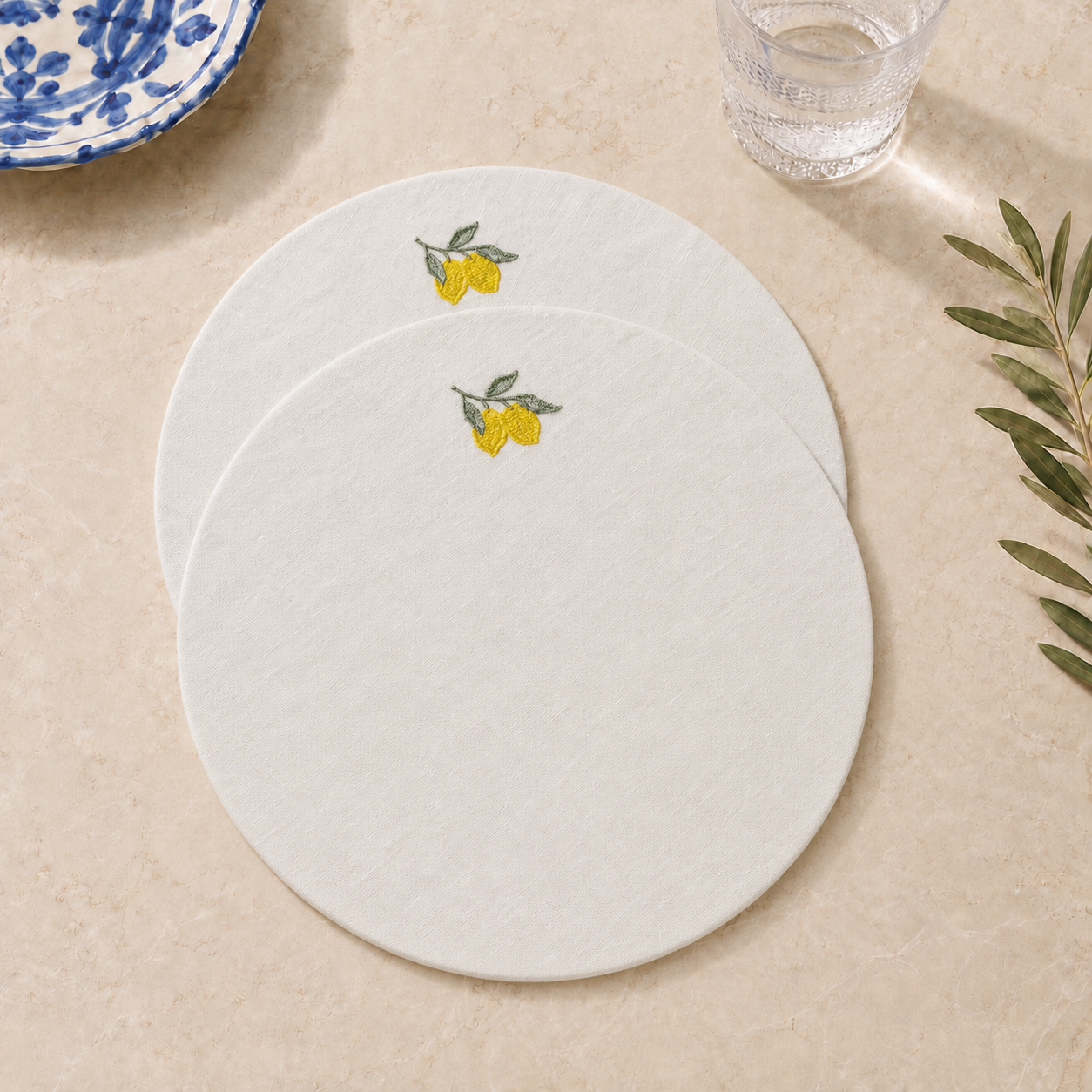
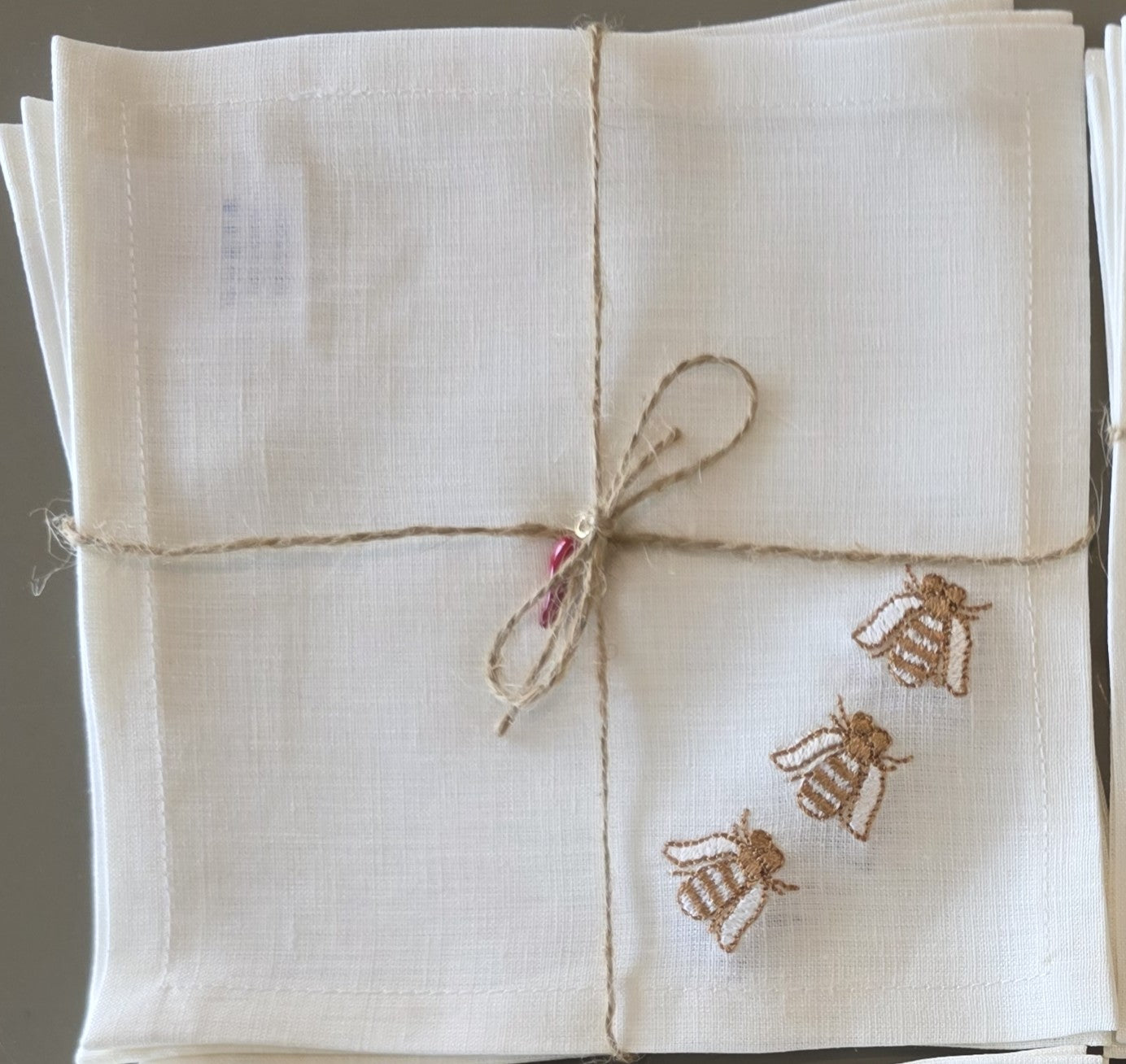
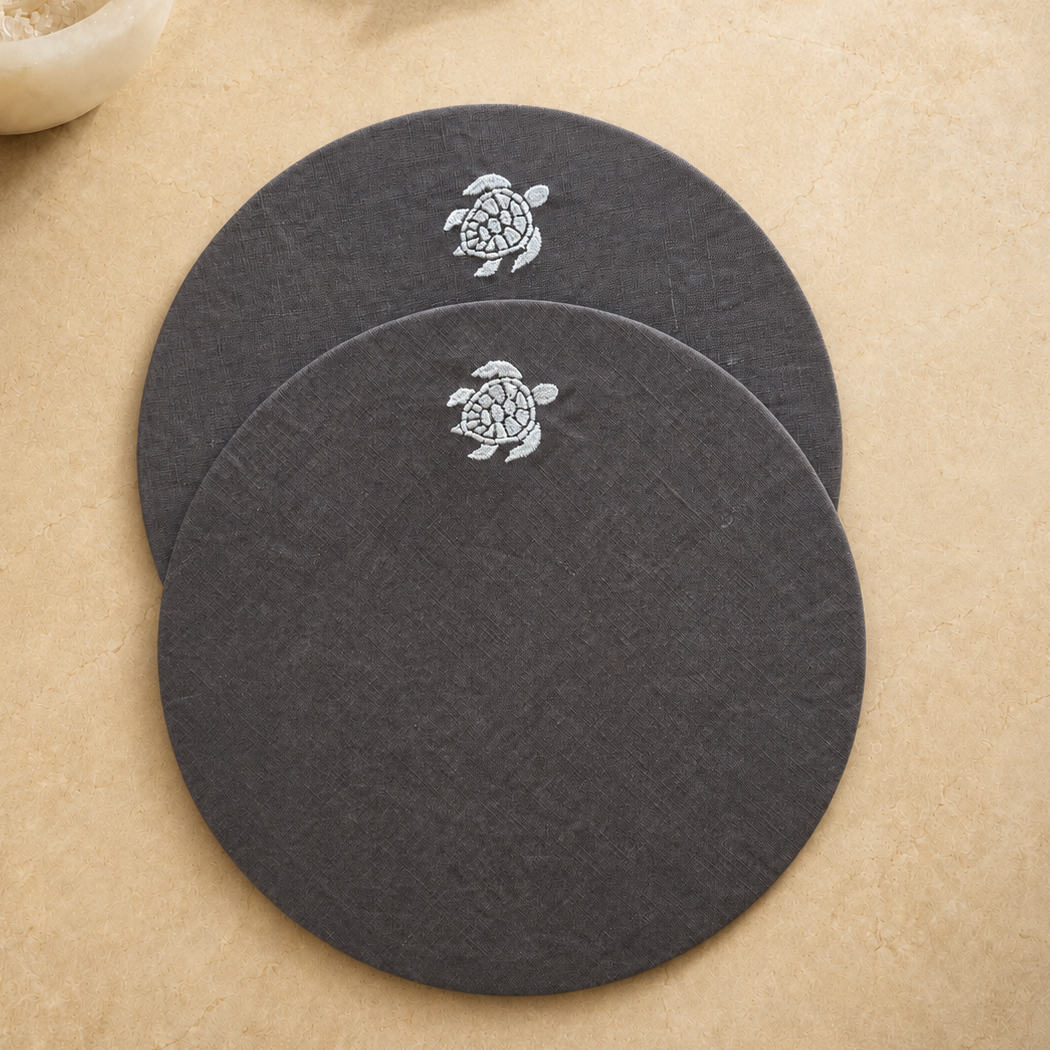
One practical thing does help, which is that nobody should have to clear the table in a hurry. A surface everybody is worried about has a way of shortening the end of a meal. The pieces we make are made to tolerate a long afternoon: a mat that takes a glass set down without thinking, a napkin made to get softer with use, a basket that still looks like itself once the bread in it is gone.
The rest is subtraction. Leave enough bare table that people can put their elbows somewhere, and keep the middle clear so nothing has to be moved when the coffee arrives. The argument for leaving room is one we have made at length, and the sizes and quantities live in the buying guide rather than here.


What does sobremesa mean?
It is Spanish for the time spent at the table after a meal has finished, from sobre, on top of, and mesa, table. Conversation replaces the food, chairs get pushed back, and the gathering can run for hours.
Is there an Italian word for sobremesa?
No single everyday noun, and the difference is one of focus rather than a gap. Sobremesa names an activity and keeps the table inside the word. Italian offers dopopranzo, which Treccani glosses as the afternoon, the part of the day following the midday meal. It marks when something happens and says nothing about what. Tavolata names a long table full of people, not the hour after the food.
What does fare la scarpetta mean?
Wiping your plate clean with a piece of bread. The Accademia della Crusca traces the earliest attestation to the magazine La Frusta on 2 September 1871, in Romanesco, and places the origin in the centre or south. The etymology is disputed between a Sicilian word for scarcity, a cheap shoe and a concave pasta shape, and the Crusca states that none of the hypotheses is verifiable.
What does abbiocco mean?
The heavy drowsiness that comes after eating. Treccani derives the related verb abbioccarsi from biocca and glosses it as crouching the way a brooding hen does, and marks the word as regional.
Do Italian families still eat together?
Largely yes, although less than they did. Writing from Tuscany, Emiko Davies describes eating as what life revolves around in Italy and notes that half past eight in the evening is a normal dinner hour for small children there. At the same time, the share of Italians eating lunch at home has fallen from 84.5 percent to 72.9 percent over the past decade.
What is analog dining?
A term for the return to meals and gatherings that happen in person and off screens. Writing in TABLE Magazine in January 2026, Keith Recker connects it to what he calls digital boredom, and reports that searches for dinner party dining on Pinterest and Instagram rose 160 percent between 2024 and 2025.
How do you get people to stay at the table longer?
Mostly by removing the reasons to leave. Serve coffee at the table rather than moving everyone to another room, leave enough bare surface that people can rest their arms, and keep the middle clear so nothing has to be shifted when something new arrives.
On sobremesa, its etymology and Georg Simmel on the shared meal: Word: Sobremesa, words by Apoorva Sripathi, Kinfolk, Issue 57.
On fare la scarpetta, the attestation in La Frusta of 2 September 1871, the later dictionary record, the competing etymologies and the note that none of them is verifiable: In Italia facciamo (la) scarpetta (anche senza conoscerne l'origine), consulenza linguistica di Luisa di Valvasone, Accademia della Crusca, 24 October 2022.
On abbioccarsi, its derivation from biocca and its marking as regional: Treccani, Vocabolario. On dopopranzo glossed as the afternoon, the part of the day following the midday meal: Treccani, Vocabolario.
On eating together in Tuscany, dinner at half past eight for small children, recipes arriving through a mother-in-law, and years of cooking two meals: At Home with Emiko Davies, words by Alexandra Dudley, photography by Emiko Davies, Table Magazine, United Kingdom.
On analog dining, digital boredom and the 160 percent rise in dinner party searches, which that article attributes to a third party rather than to its own research: 2026 Food Trends: High Quality Protein and Analog Dining, Keith Recker, TABLE Magazine, United States, 6 January 2026.
On the fall in Italians eating lunch at home from 84.5 to 72.9 percent: analysis by Fondazione Birra Moretti, reported by ANSA on 14 October 2026.
The two publications named Table Magazine here are separate and unrelated, one in the United Kingdom and one in the United States.
Nothing on it that anybody has to worry about.