
Welcome to MI RE LA

Every day, breakfast, lunch and dinner, thirty minutes before the meal was ready, while the mother cooked, the children set the table. Exactly as she had taught them. If there were siblings the tasks were divided: one set the table, another cleared it afterward. It was not negotiable and it was not celebrated. It was simply how things were done, and over years of doing it, it turned into something else.
It became a way of understanding that a meal is not only food. That the people around the table deserve a space prepared with care. That beauty in everyday life is not reserved for special occasions.
We do not know whether this happens everywhere. But in Italy, for many of us, it did. And MI RE LA was born from that memory.
Mirella
Mirella was a pianist. Those who knew her remember not only her music but the way she moved through her home: the attention she gave to small things, the way a table was dressed, the way a meal was prepared. There was no separation, in her world, between the aesthetic and the everyday. Both deserved the same care.
She had also already taken her own name apart. Mirella wanted to open a children's shop, and she had decided what it would be called: MI RE LA. Three notes on the keyboard, three syllables of her own name.
Then there were five children, and she stayed with the family instead. The shop never opened and the name went nowhere for decades.
Her daughter Ilaria opened something else entirely, and used it.
MI RE LA was a shop sign waiting for a shop. It took a generation to get one.
Ilaria
Ilaria did not come to linen as a curator. She came to it as a maker.
For years she worked with her hands: mosaics, embroidery, linen cushions, made slowly and one at a time. She sold them privately, to people who could tell the difference between an object that had been designed and one that had been made. Linen was never simply a fabric to her. It was the thing she kept coming back to.
She grew up in northern Italy, surrounded by the textile culture that runs quietly through that part of the country: in the workshops, in the homes, in the hands of women who worked with thread and needle across generations. She moved first to New York, then to Miami, and took with her a taste for considered objects at a moment when the market was moving the other way.
The further she moved from Italy, the more clearly she understood what made it irreplaceable. Not the monuments, not the food, but the particular way Italians treat the domestic: the table, the cloth, the small daily rituals that turn an ordinary meal into something worth remembering.
When she decided to go back to Italy to find the artisans she had known growing up, by then the daughters of her mother's friendships, she was not going as a businesswoman looking for suppliers. She was going as one of them. Someone who knew what it meant to sit with a piece of linen and give it time.

She chose the pieces carefully and brought them back to Miami, to the farmers markets where the whole thing started. People stopped. They touched the linen. They asked questions. They came back.

A Dinner, a Decision
Diego had known Ilaria for years. One evening, over dinner, he looked at what she had built and said something simple: this is very beautiful. It is a shame that people in the States cannot easily find it.
That observation became a question, and the question became a project. Diego brought what he knew: e-commerce, brand, and the conviction that what Ilaria had built deserved to be found. Together they made MI RE LA Italian Style.
What We Make
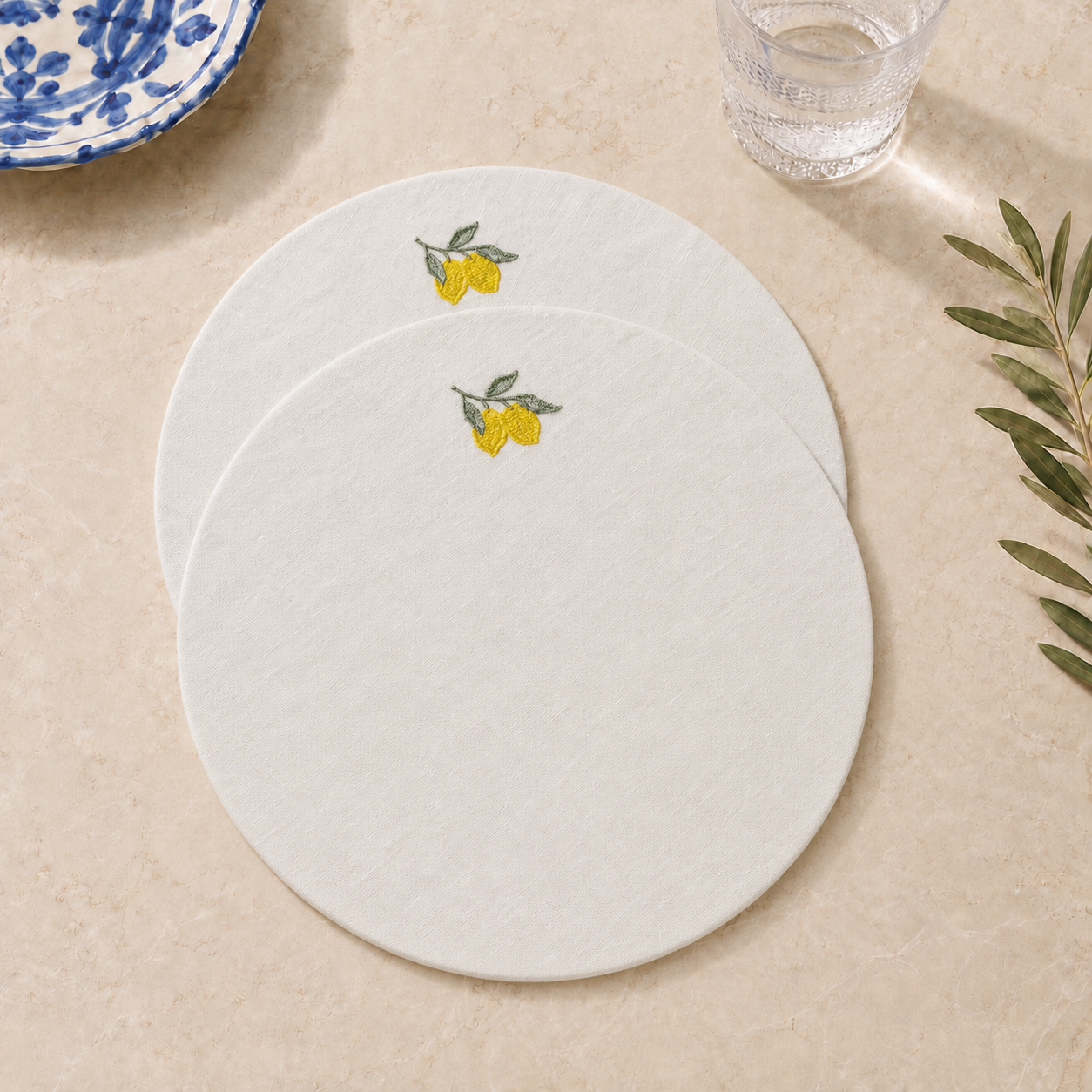
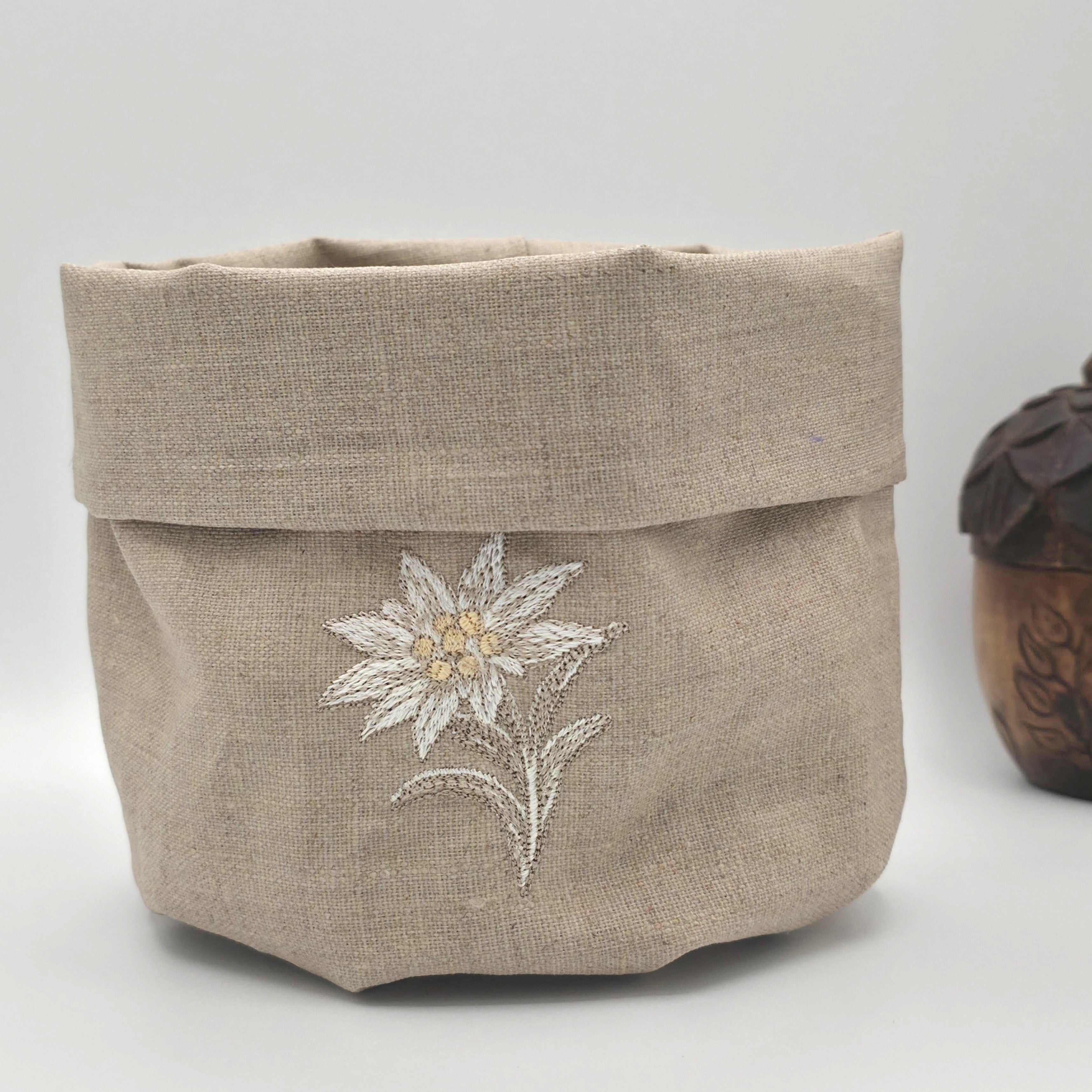
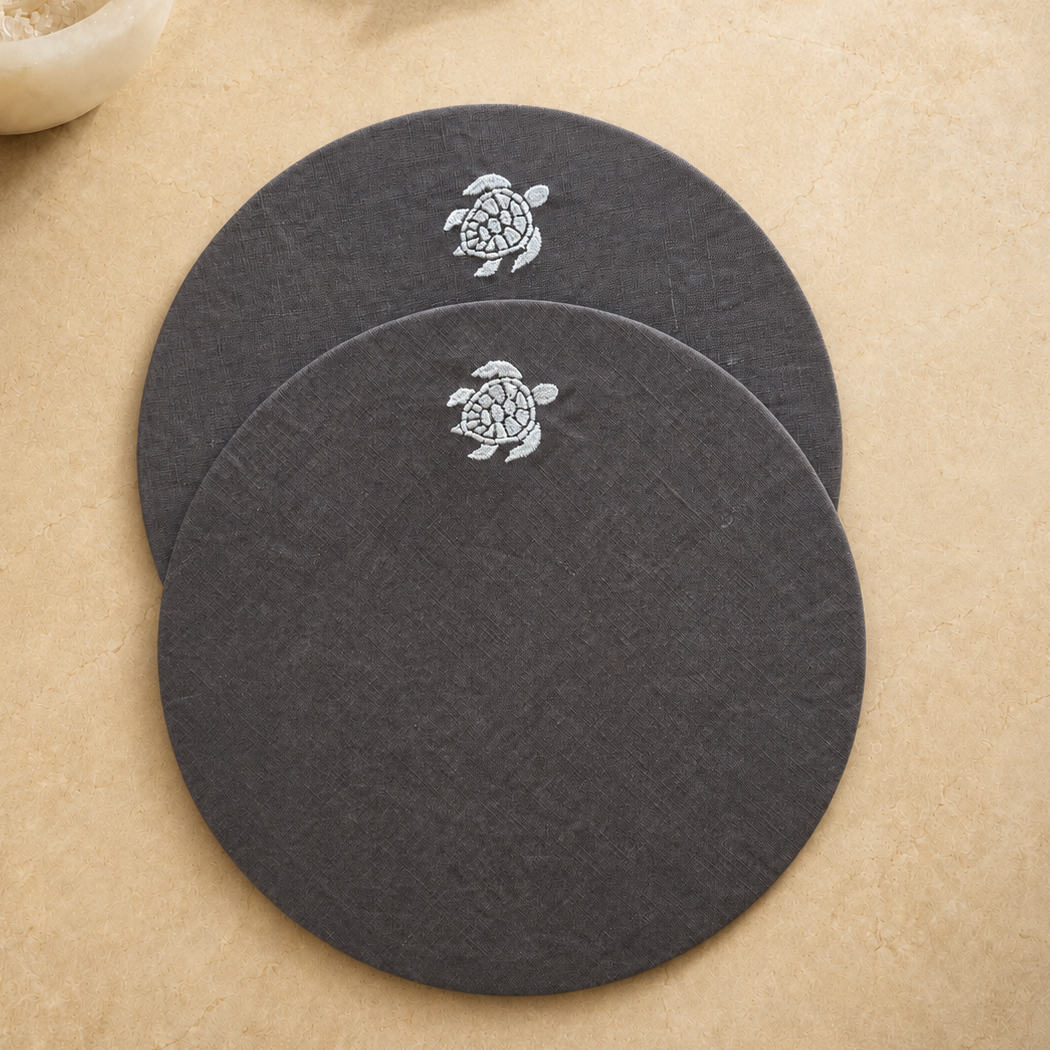
MI RE LA makes table linen: placemats, napkins, cocktail napkins and bread baskets, made in small workshops in Italy by people who take every stage of it by hand.
Our signature pieces are made in resin-coated linen, cut, sewn and embroidered in Italy: a material that keeps the warmth and the texture of the cloth while standing up to the life a table in daily use actually has. We do not call it Italian linen, and there is a reason for that. Each piece carries an embroidered motif taken from a specific place: the Amalfi Coast, Tuscany, the Dolomites above Cortina.
These are not decorative objects. Every one of them was chosen for its connection to a particular place, a particular tradition, and a particular idea of what it means to set a table with care.
The Italian Lifestyle Journal
This Journal is where we tell the stories behind the objects. The history of linen. The symbolism of a sardine on the Amalfi Coast. The meaning of slow living in a Tuscan valley. The craftswomen who carry these traditions forward with their hands.
We write it because knowing where something comes from makes it more beautiful, not less. And because a table, at its best, is never only a surface.
Welcome to MI RE LA. Please, take a seat.
Frequently Asked Questions


What does MI RE LA mean?
Mi, re and la are three notes on the keyboard, and together they spell Mirella: the name of the pianist whose daughter founded the brand. Mirella chose it herself, for a children's shop she intended to open and never did, having five children instead. Her daughter used it decades later for something else.
Who founded MI RE LA?
Ilaria, who worked for years with her hands in mosaic, embroidery and linen before the brand existed, and Diego, who brought the e-commerce and brand side. The idea came out of a dinner conversation about how hard it was to find work like hers in the United States.
Where are MI RE LA pieces made?
In small workshops in Italy, where the linen is cut, sewn and embroidered one piece at a time. The flax itself, as for virtually all European linen, is grown in the flax belt of western Europe rather than in Italy.
What does MI RE LA make?
Table linen: placemats, napkins, cocktail napkins and baskets, embroidered with motifs drawn from specific Italian places. The placemats are built on a rigid disc with a removable resin-coated linen top.
Cut, sewn and embroidered in Italy.